
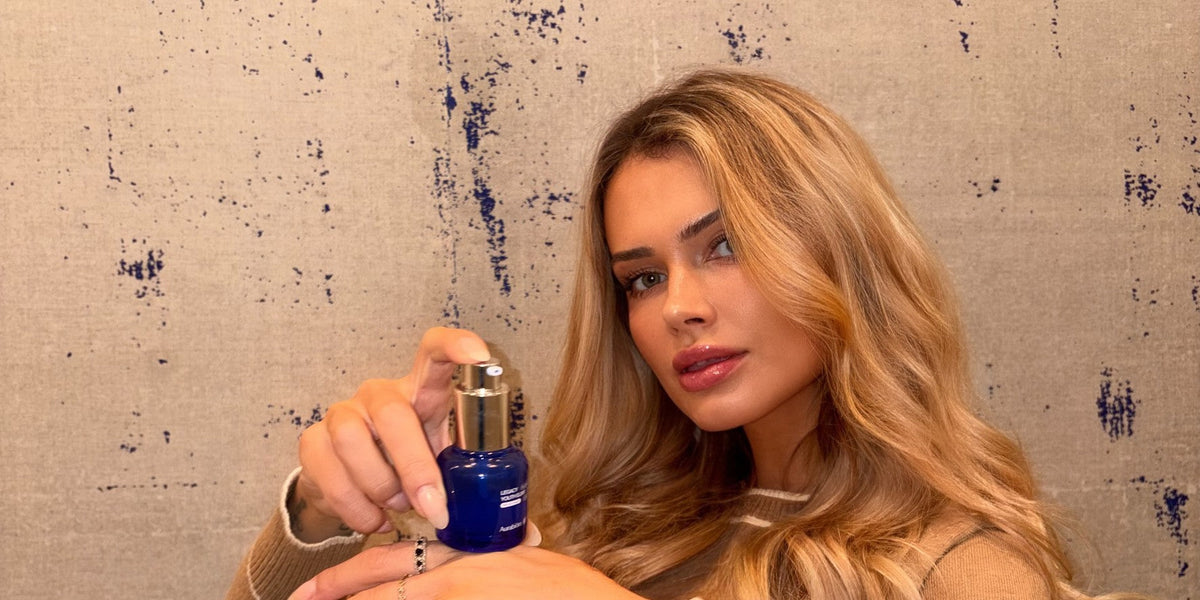
Start with what your serum already does
Look at the first few ingredients of your serum. In Legacy Youth Elixir they are purified water, glycerin, butylene glycol and carbomer, a gel former. Further down are four forms of hyaluronic acid. Glycerin, butylene glycol and hyaluronic acid are humectants: they attract water and hold it in the outer layer of skin.
What the list does not contain is just as useful. There is no petrolatum, mineral oil, lanolin or silicone, and the carton says "Silicone Free." Those are the ingredients most moisturizers rely on to slow water evaporating from the skin.
A dermatology review of moisturizer types explains why that gap matters. A humectant on its own can draw water into the outer layer and still let it evaporate, so it is normally paired with an occlusive that slows the loss. Most moisturizers combine three kinds of ingredient, and a hydrating serum usually covers only the first. If your serum instead lists oils, butters or silicones near the top, it already does some of the softening and sealing, and a lighter moisturizer may be enough.
Already in your serum: attract and hold water
Glycerin, butylene glycol, sodium hyaluronate, panthenol, urea, sodium PCA.
Add with the moisturizer: soften the surface
Squalane, caprylic/capric triglyceride, cetearyl alcohol, glyceryl stearate, shea butter, ceramides.
Add with the moisturizer: slow water loss
Petrolatum, mineral oil, dimethicone, lanolin, beeswax.
Many ingredients do more than one job. Dimethicone softens as well as seals, and squalane and fatty alcohols appear in more than one category.
A crossover study in 51 volunteers with dry skin illustrates the two jobs. Researchers applied four versions of a manufacturer's cream to the forearms: the base alone, the base with glycerol (glycerin), the base with petrolatum, and the complete cream, and measured for 12 hours. Comparing the versions, the authors attributed the drop in water loss to the petrolatum and the rise in moisture readings to the glycerol; the complete cream did both. This was forearm skin, measured with instruments rather than by how it felt, but it is a clear picture of why the pairing works.
Do you need a moisturizer at all?
Usually yes, but not always a heavy one. If your skin feels comfortable through the day after the serum alone, especially if it is oily or you live somewhere humid, you may only need a light gel, or moisturizer just on drier areas. The American Academy of Dermatology suggests people with oily skin consider a gel or skipping moisturizer, and that people with combination skin moisturize the dry spots and skip the oily ones.
The signal to add more is simple: tightness, flaking or a dull, papery feel a few hours after your routine. That is often a sign that the serum's water is leaving without anything to slow it down, though a harsh cleanser, dry air or a strong active can cause it too.
Oily skin is not a reason to avoid moisturizer altogether. The AAD's acne guidance notes that skin which becomes dry can produce more oil. Lighter, not none, is the usual answer.
Choose by your skin, season and time of day
Oily or acne-prone skin
Start with a gel or light lotion, or a light SPF moisturizer in the morning. Look for "oil-free" or "non-comedogenic", and check whether the moisturizer brings its own acne active.
In a review of 52 moisturizers sold for acne-prone skin, more than half contained dimethicone, glycerin or both: dimethicone slows water loss without a greasy film, and glycerin holds water. Some also carried salicylic acid, benzoyl peroxide or retinol, so check the label before adding one to a routine that already includes an acne treatment. Do not rule out a product because one ingredient appears on an old "comedogenic" list. In a small study on finished products, six acne-prone volunteers wore products under patches on their backs for four weeks, and products containing supposedly pore-clogging ingredients did not necessarily cause clogged pores. Your own skin over a few weeks is the better test.
Dry skin, winter and heated rooms
Start with a cream, and a richer cream or balm at night if you need it. Look for petrolatum, dimethicone, shea butter, ceramides or squalane near the top of the list.
Cold air and low humidity weaken the skin barrier and make it more reactive, according to a review of humidity and temperature research. The AAD notes that lighter lotions may not be enough in cold, dry climates. Many people keep one moisturizer year-round and switch to a richer one for winter nights. The serum does not need to change.
Sensitive or easily irritated skin
Start with a short, simple cream you already tolerate. Look for "fragrance-free" rather than "unscented", and fewer ingredients.
Fewer ingredients means fewer chances of a reaction. The AAD points out that "unscented" products can contain ingredients that mask odor. Introduce one new product at a time so you can tell which one is responsible if something goes wrong.
Mornings under sunscreen or makeup
Start with a light lotion, or a moisturizing broad-spectrum sunscreen of SPF 30 or higher as one step. Look for a texture that sits smoothly under the next layer.
The AAD's routine order is cleanser, then treatment, then "moisturizer and/or sunscreen." That "or" matters. If your skin is comfortable, a moisturizing sunscreen can be the moisturizer step; use a full sunscreen amount, not a moisturizer-sized dab, so you get the protection on the label. If you need more, use a light moisturizer first and choose one that does not pill or slide under your sunscreen or makeup. Reapply sunscreen as its label directs.
Nights
Start with your usual cream, or a richer one if your skin feels tight by morning. Heavier, more occlusive textures are easier at night, when nothing has to sit on top. If you use a retinoid at night, a plain moisturizer is the usual partner; plan retinoid combinations separately.
Read the label for the job, not one hero ingredient
Scan the first several ingredients after water. That is where the formula's character shows. A cream that lists petrolatum, dimethicone or shea butter early is built to seal and soften. One that lists mostly water, glycerin and gel thickeners is closer to another hydrating layer, which may not be what you need on top of a hydrating serum.
Do not over-read position further down. US labeling rules require ingredients above 1 percent to be listed in descending order of amount, but anything at 1 percent or less can appear in any order. Below the first handful, list position tells you little about how much is present.
You do not need another peptide in your moisturizer. If your serum already covers that step, a straightforward cream is often the better partner. Actives in a moisturizer make sense for a specific goal you have chosen. If you also use retinoids, vitamin C or exfoliating acids, plan those combinations separately rather than adding more actives through the cream.
Does a moisturizer block the serum?
There is no good study of a peptide serum under a moisturizer, so nobody can tell you it blocks, or that it never affects, what the serum does. The practical order is the one dermatologists recommend anyway: the treatment step on clean skin first, then the moisturizer. Application amount, timing and pilling are covered in our application guide. Where the serum fits in your morning routine is in the simple routine guide.
Keep, adjust or switch
Give a new pairing a couple of weeks in your ordinary routine. Judge it at three moments: right after applying, a few hours later, and under whatever comes next.
- Keep it if your skin stays comfortable through the day, nothing pills, and you enjoy using it. A moisturizer you already own that does this is the right choice. It does not need to be expensive: the AAD notes that basic products work, and a simple cream can do the sealing job.
- Adjust before you buy: use a little more or less, use it only on drier areas, or use your richer cream only at night.
- Switch if tightness returns within hours (go richer), you feel greasy or see more breakouts over several weeks (go lighter or oil-free), or you get redness, itching or stinging (stop, and return to a product you tolerate).
If you are unsure about a new product, the AAD suggests trying it on a quarter-sized patch of skin, such as the inside of your elbow, twice a day for seven to ten days first.
Sources & References
2. Purnamawati S, et al. The role of moisturizers in addressing various kinds of dermatitis: a review. Clinical Medicine & Research, 2017. Review
3. Chularojanamontri L, et al. Moisturizers for acne: what are their constituents? Journal of Clinical and Aesthetic Dermatology, 2014. Review
4. Draelos ZD, DiNardo JC. A re-evaluation of the comedogenicity concept. Journal of the American Academy of Dermatology, 2006. Study
5. Engebretsen KA, et al. The effect of environmental humidity and temperature on skin barrier function and dermatitis. Journal of the European Academy of Dermatology and Venereology, 2016. Review
6. American Academy of Dermatology. How to pick the right moisturizer for your skin; Dermatologists' top tips for relieving dry skin; Your winter skin survival kit; Moisturizer: why you may need it if you have acne; Should I apply my skin care products in a certain order?; Skin care on a budget; How to test skin care products
7. US Code of Federal Regulations, 21 CFR 701.3, Designation of ingredients. Regulation