
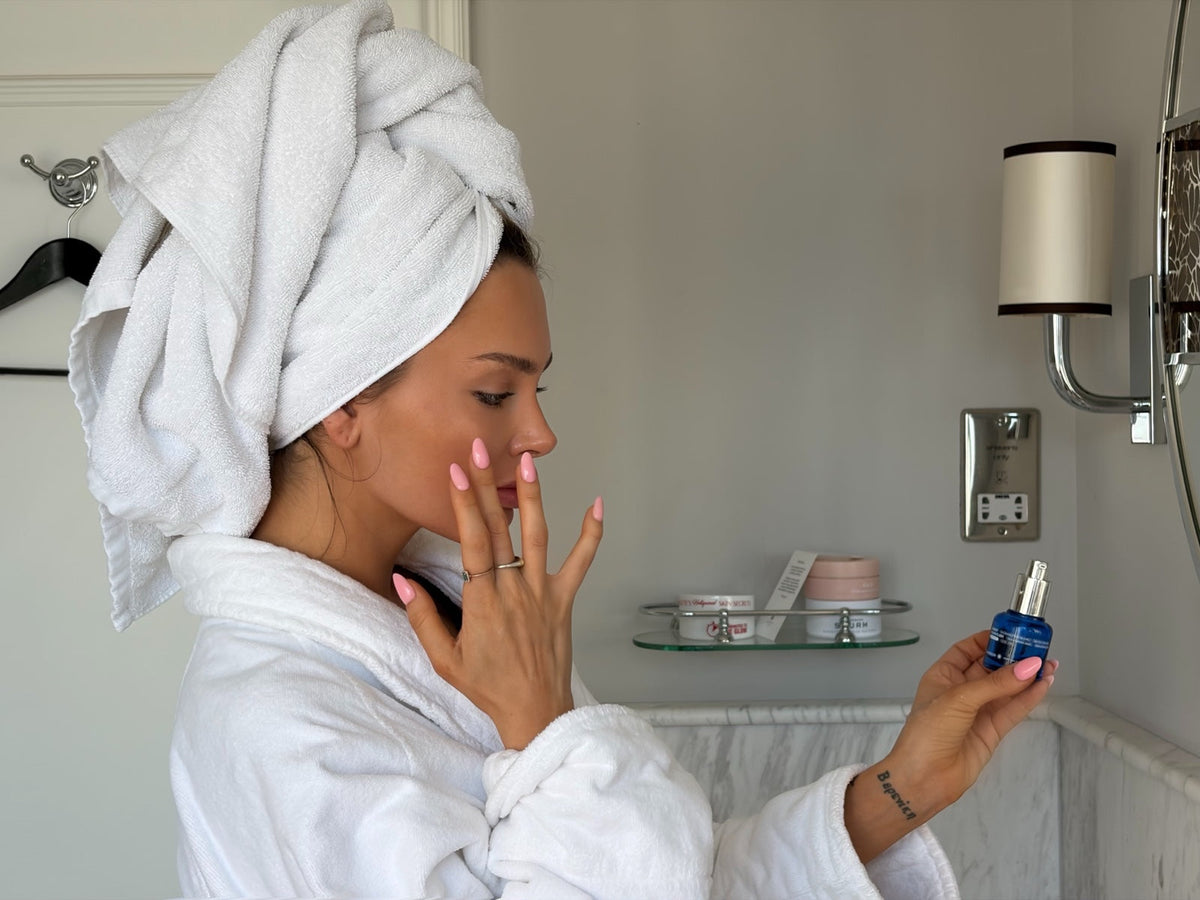
Start with the label
The directions call for 2–3 pumps on clean, dry skin every morning. That is the starting point for amount, skin preparation and frequency.
After cleansing, pat your skin dry. Dispense 2–3 pumps and spread the serum gently over the area you are using the serum on. Aim for an even, light layer rather than repeatedly rubbing the same spot. Keep it out of your eyes and use it only topically.
If you miss a day, return to your usual routine rather than adding extra serum.
Store the bottle in a cool, dry place away from direct heat and sunlight, as the label directs. Keeping it beside your other daily products can help you remember it, provided that spot meets the storage conditions.
Let the layer settle
Once the serum is no longer sitting as a wet layer, apply your moisturizer. You do not need to count out a precise minute. This pause is a practical way to layer comfortably, not a proven window for peptide absorption.
Keep sunscreen separate and follow its own directions. If you need the whole AM/PM order, the simple routine guide lays it out.
If the serum pills
Small rolls or flakes that appear while you rub products together are usually a layering problem. They do not tell you how much peptide reached your skin.
Try one adjustment at a time:
- Use the label amount. Avoid adding repeated layers of serum.
- Let the first layer settle. Apply the next product gently instead of continuing to rub.
- Remove an optional layer. Try the serum and your familiar moisturizer without toner, essence or another serum.
- Check the pairing. If pilling only happens with one moisturizer or sunscreen, try a different pairing or give the serum a little longer to settle first.
Do not reduce sunscreen below its directions to make the layers work. It is usually easier to simplify what sits underneath it.
Simplify the layers
Use the label amount, let it settle and remove an optional layer.
Check the pairing
Try the serum at a different time or with a different familiar moisturizer.
Stop and reassess
Burning, itching, redness or swelling needs a different response from pilling.
If your skin feels irritated
Burning, itching, redness or swelling is a reason to stop using the product, not a sign that it is working. Rinse it off if it is still on your skin. Seek professional advice if the reaction is significant or persists.
Before introducing a new product more widely, you can follow the AAD's small-area testing guidance: test on a small area twice daily for seven to ten days. This is a screening step, not a guarantee that your face will tolerate it.
Keep the rest of a comfortable routine steady while trying something new. If you introduced several products together, it becomes much harder to tell which one caused the reaction. Avoid trying to solve irritation by adding several more products.
Make other treatments easier to manage
For a retinoid, prescription treatment or vitamin C product, use its own instructions. A generic “thinnest to thickest” rule should not replace them.
If layering feels complicated, keep the Elixir in the morning and use the other product in the evening, where its directions allow. This is a practical simplification, not a claim that every peptide and vitamin C or retinoid combination is incompatible.
Using a red-light device too? Follow its requirements for skin preparation. Our red light and GHK-Cu guide explains the science and the distinction between a lab sequence and a home routine.
Judge comfort and appearance separately
First assess whether you like using the product: how it spreads, how it sits under the next layer, and whether your skin remains comfortable. Those are useful observations from the beginning.
Appearance changes need a more consistent comparison. Take a starting photograph, then compare every few weeks with the same camera, lighting, angle and expression. Choose a specific feature to watch, such as how fine lines look, instead of trying to grade your whole face from memory.
A simple note alongside the photographs can record when you used the serum, any irritation, and changes in the rest of your routine. You are looking for a pattern, not a perfect score.
Published peptide studies use their own formulas and assessment periods. For example, a 12-week study of a palmitoyl pentapeptide moisturizer found improvements in fine lines and wrinkles compared with its control moisturizer. It did not test Legacy Youth Elixir, so it does not establish a week-by-week results timetable for this serum.
If a consistent routine feels good but you cannot see a worthwhile difference, that is useful information too. Reassess the product's role rather than increasing the amount or endlessly adding new steps.